











Huandacareo La Nopalera
Archeological site
Huandacareo La Nopalera
Originally a typical Cuitzeo Lake settlement, the same site was developed into a seat of public administration for the Tarascan state, where justice was imparted, rituals were celebrated and rulers were buried, and therefore it did not have a large population.
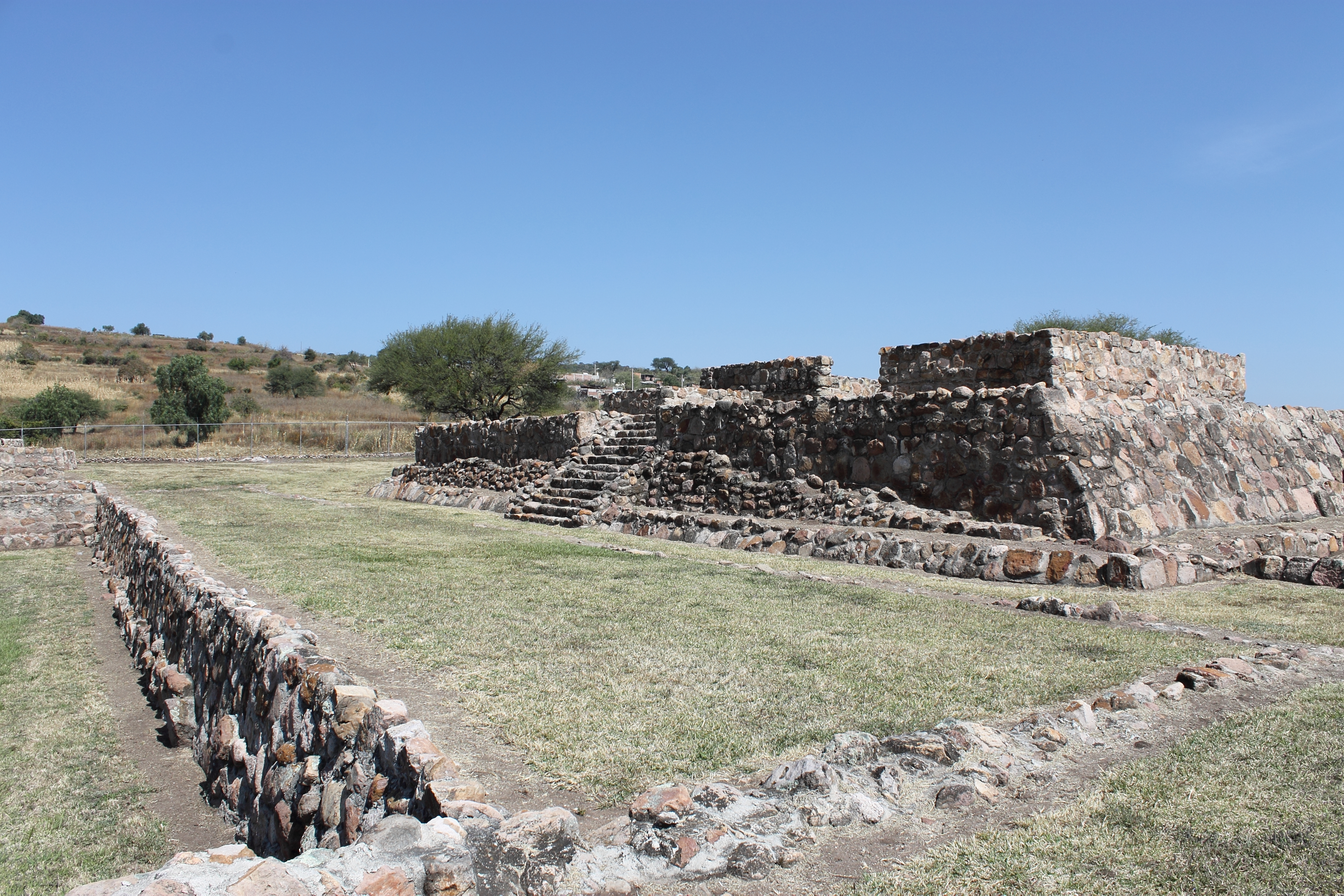
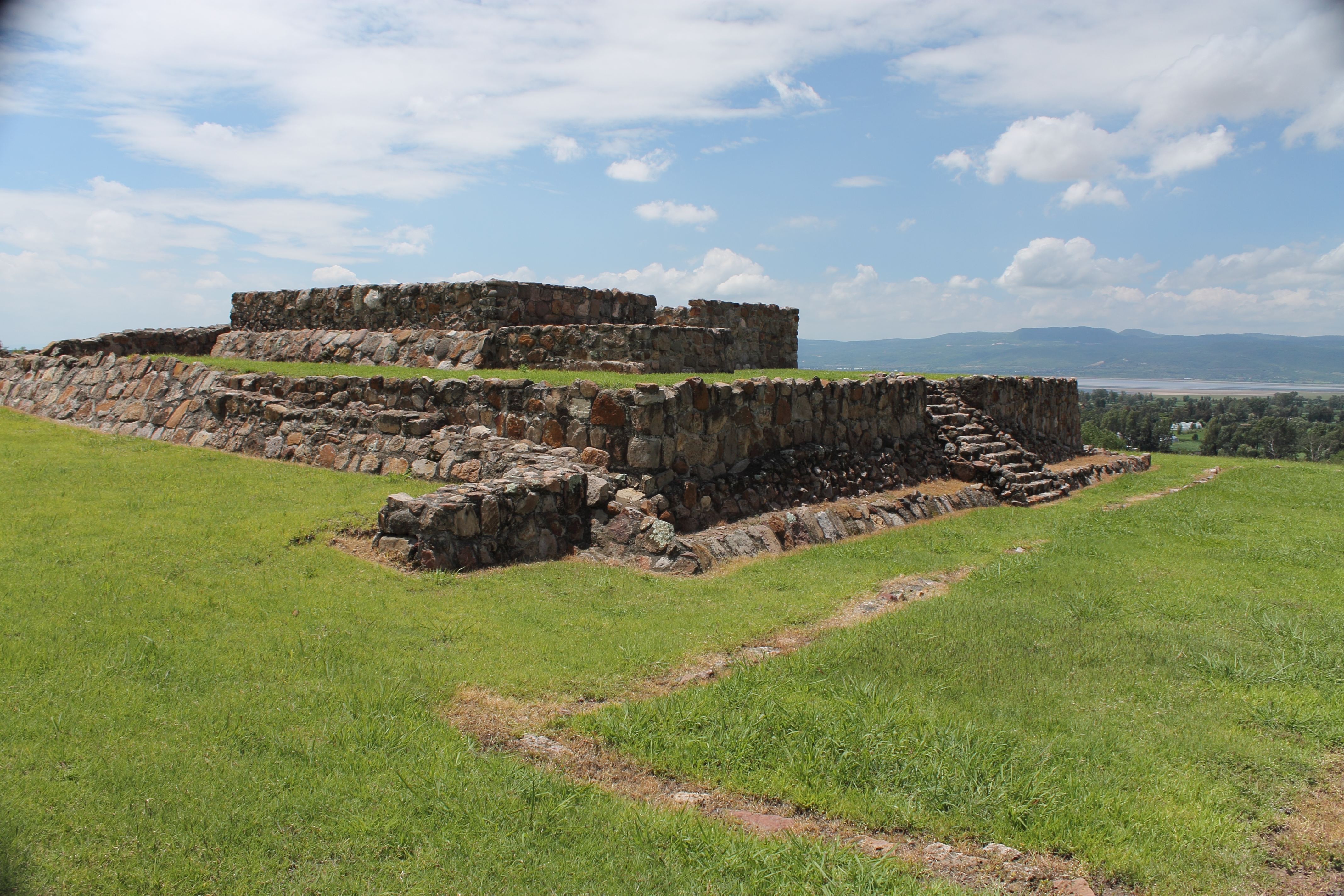
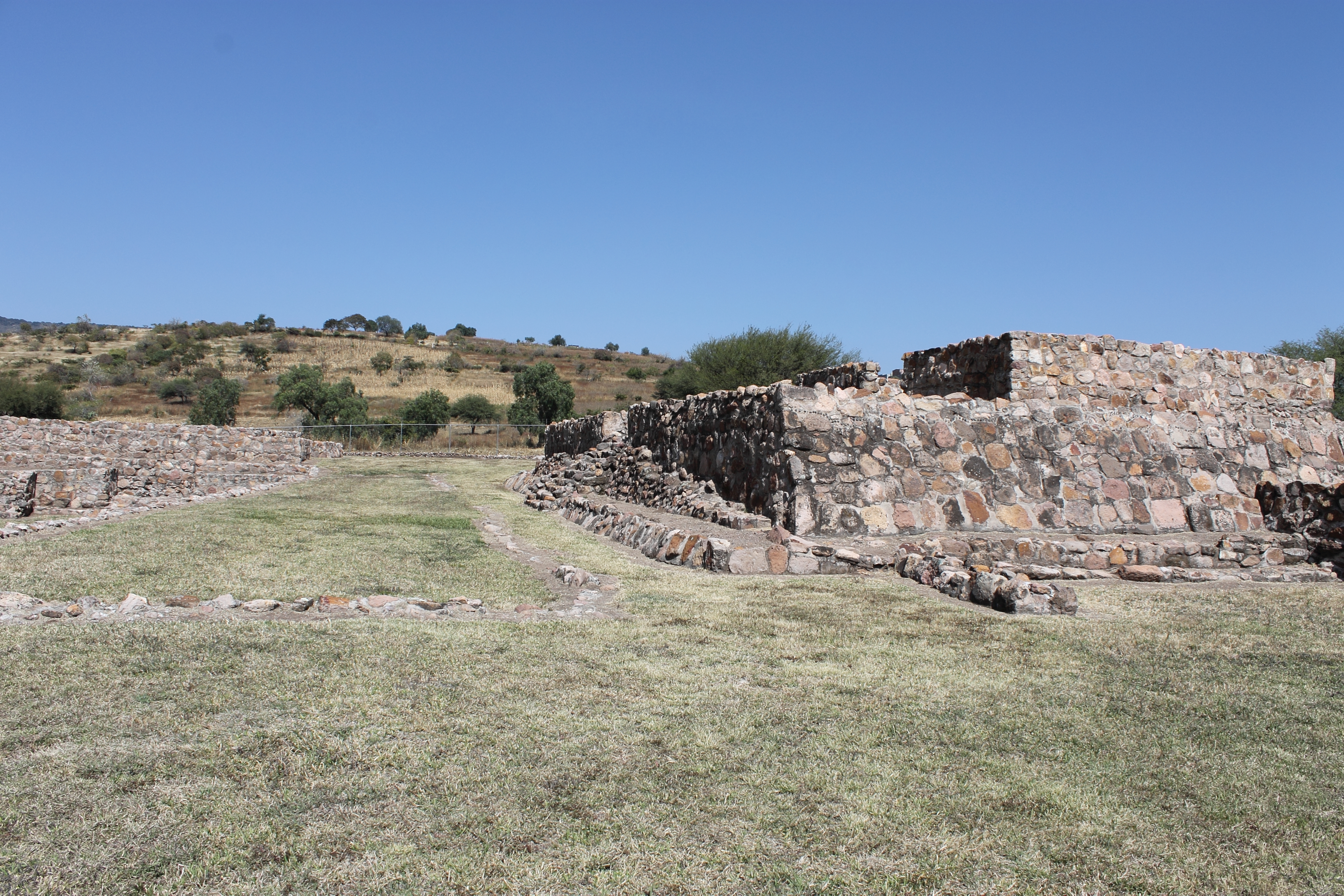
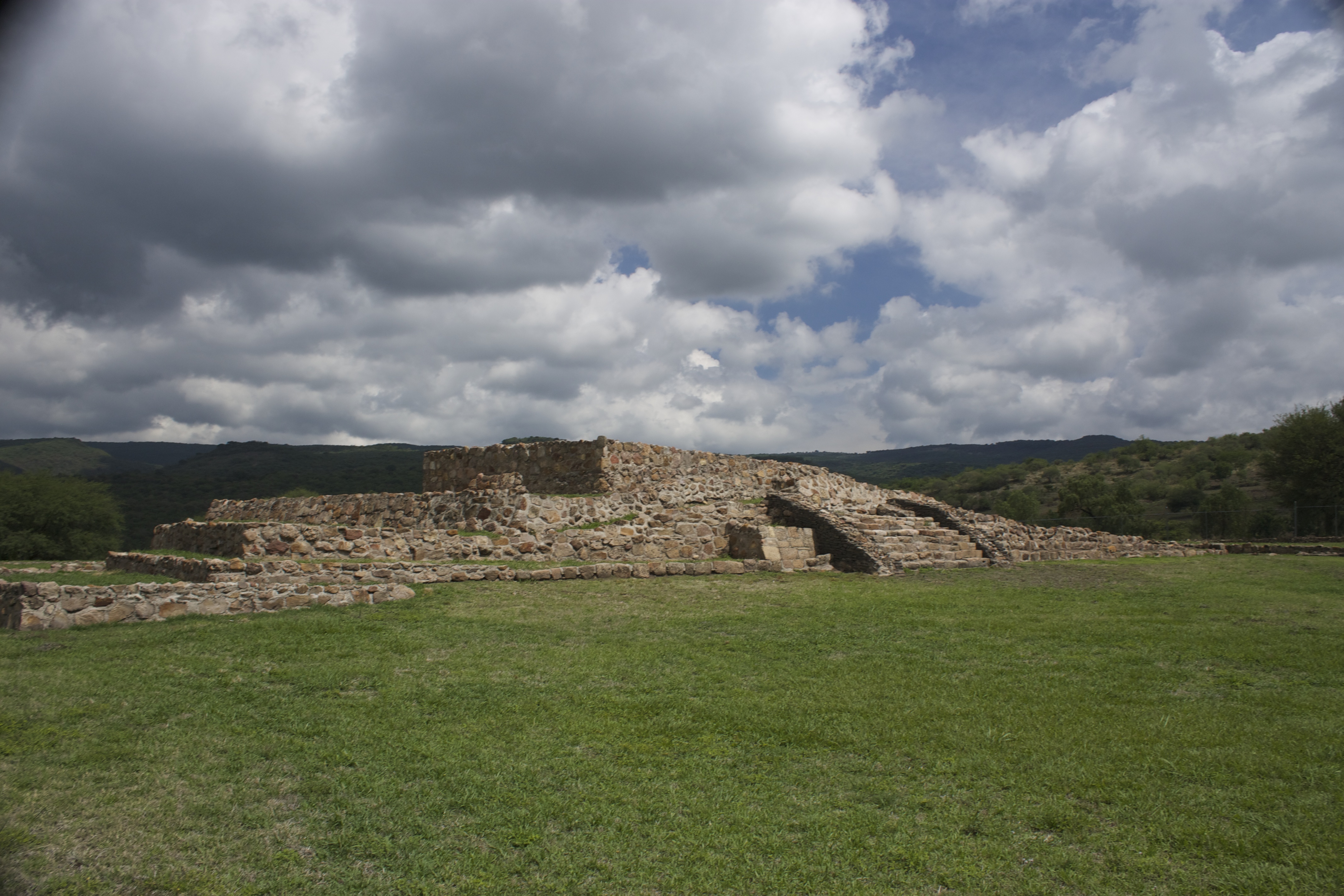
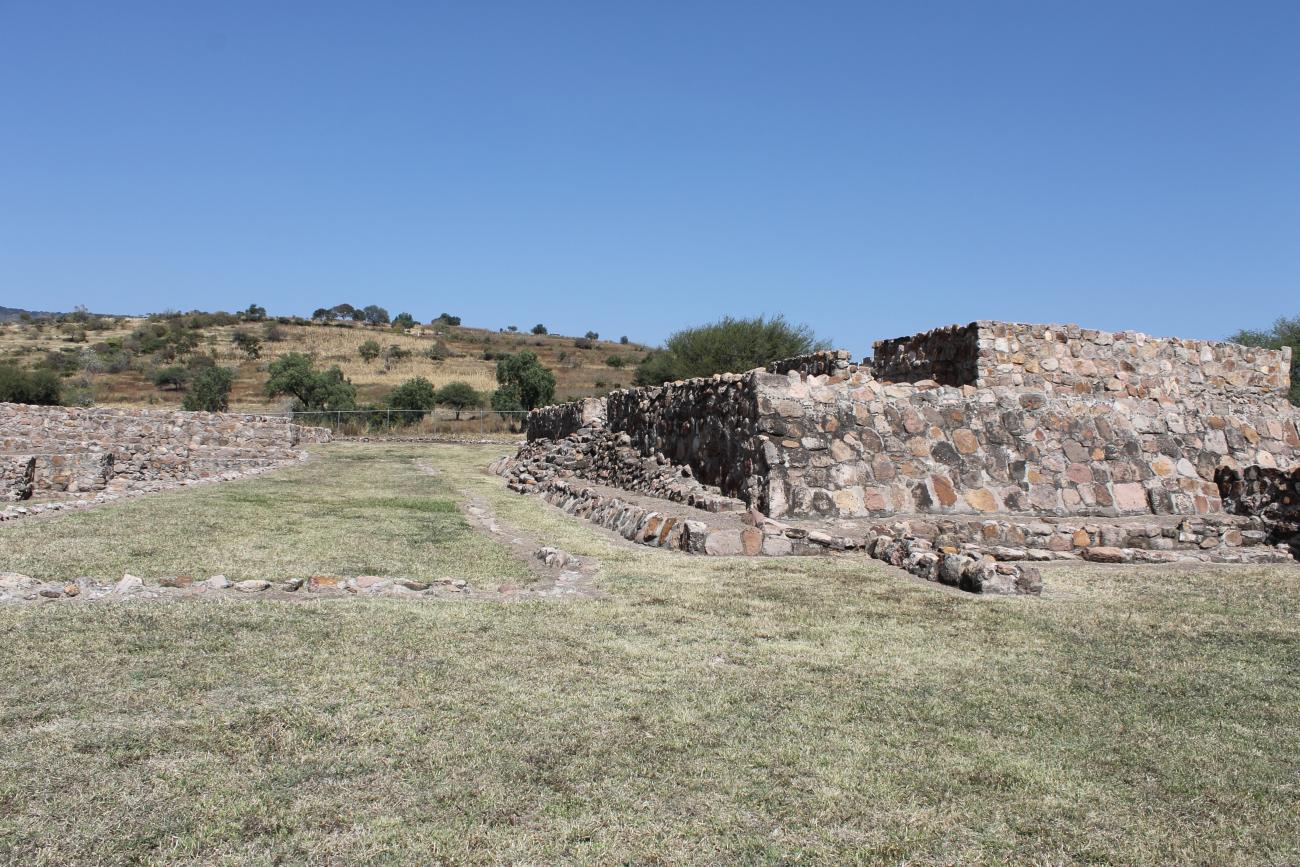
Huandacareo, or “La Nopalera,” is located on a hill to the northeast of Cuitzeo Lake. An important aspect of its construction were the earthworks needed to form its retaining walls, and a large amount of infill material also had to be moved. This is an excellent example of maximizing available land, since although the walls we can see—especially in the southeastern sector—might not seem to serve any purpose today, they actually prevented the collapse of the heavy surface structures they were supporting. Furthermore, this would also have required a large workforce to construct these spaces.
Archeological work has revealed that there were at least two very distinct stages of occupation of the area. During the first period, La Nopalera was a typical Cuitzeo lakeside settlement; in other words, it had a small population without any connection to a state or city with power over the area. However, the site preserves elements indicating architectural influence from the Bajío region, such as the sunken patio and various decorated works of pottery. Burial sites also were found in the southwestern sector, with pottery showing patterns and motifs inspired by Teotihuacan, the mighty metropolis of central Mexico, and some of the buried people were found to be wearing similar clothes to those worn by inhabitants of the aforesaid city. This indicates that the region was a melting pot for a number of different cultural traditions which maintained their own identities.
Early in the second millennium AD, La Nopalera began to be used as a seat of government for the Tarascan state; the spaces were modified in a number of ways, different methods were used for the burials, and new technologies began to appear, as shown by the use of copper. Archeological records reveal that the site had been abandoned for some time before being altered by its new occupants.


Patio de las tumbas
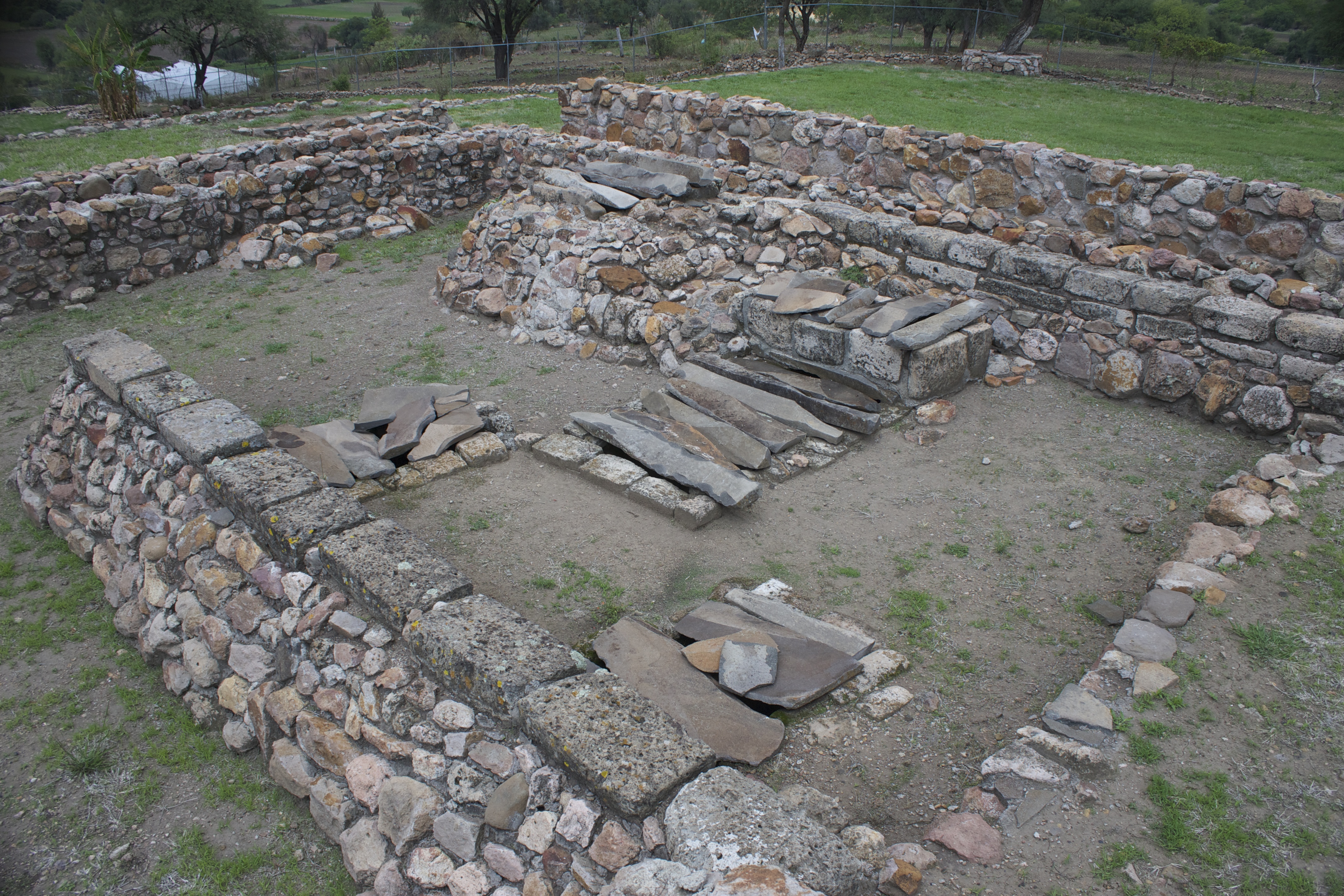
One of the most outstanding discoveries at the site of La Nopalera is its funerary architecture. The excavation work allowed us to find a series of burials that are key to understanding the occupation of La Nopalera. The so-called Courtyard of the Tombs is located in the southwest end of the sunken…
Patio de las tumbas
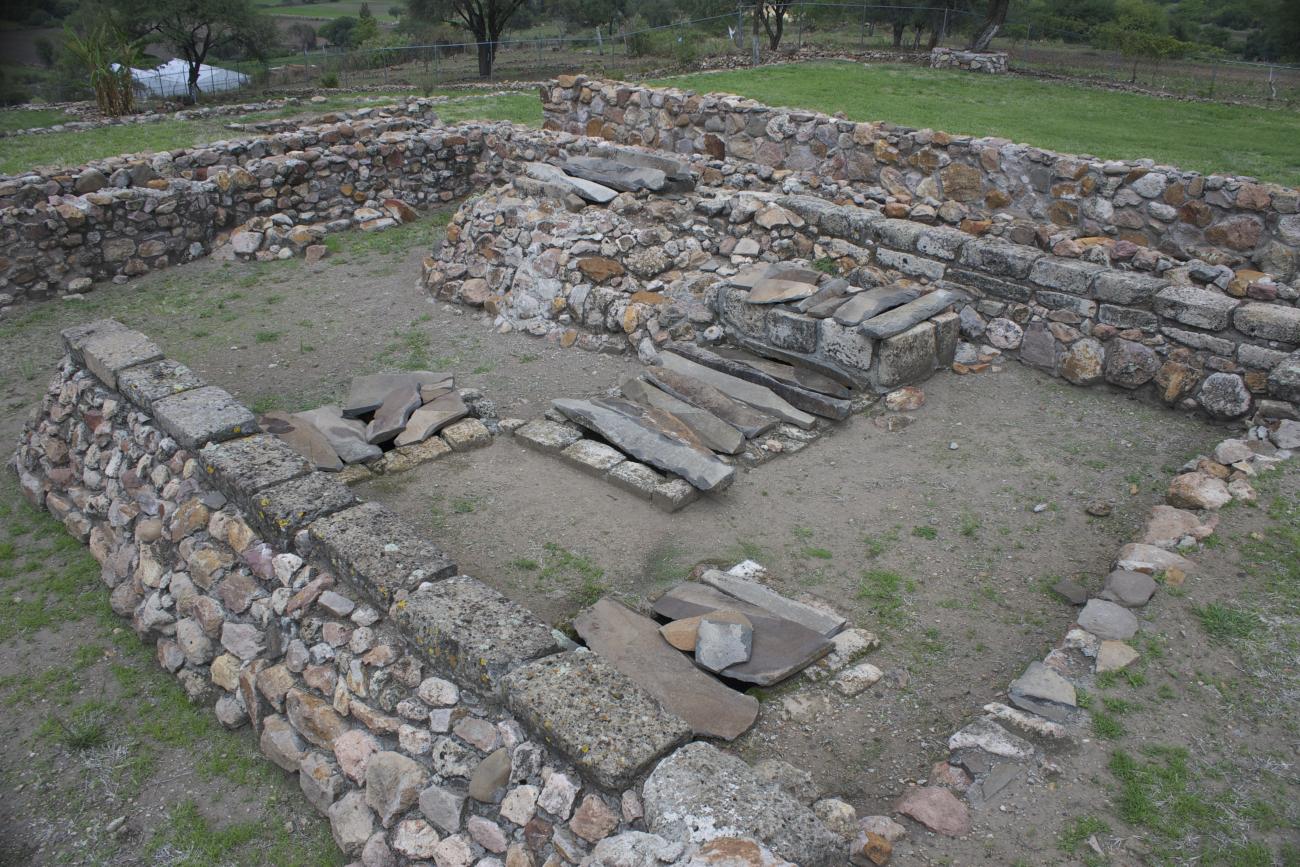
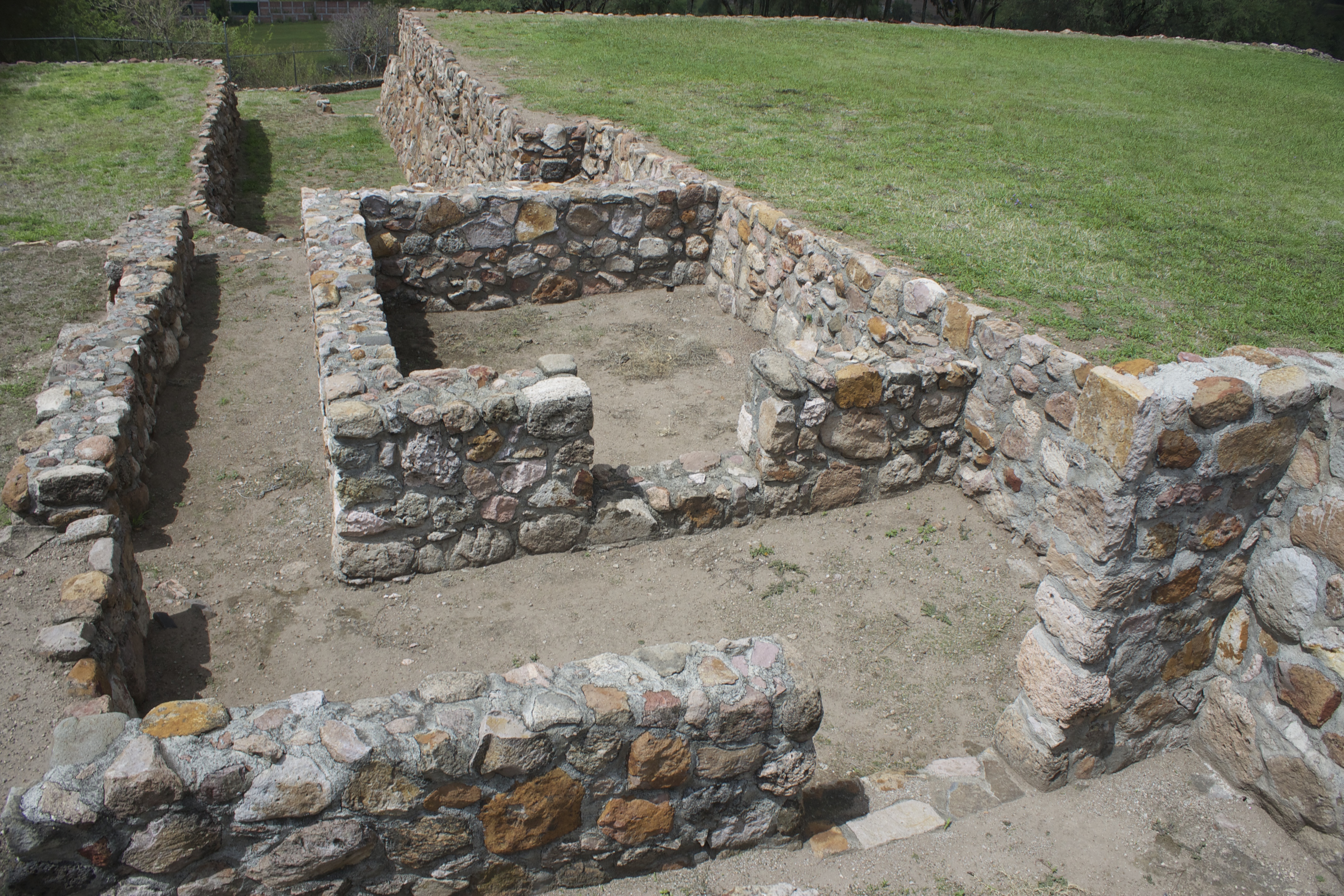
One of the most outstanding discoveries at the site of La Nopalera is its funerary architecture. The excavation work allowed us to find a series of burials that are key to understanding the occupation of La Nopalera. The so-called Courtyard of the Tombs is located in the southwest end of the sunken courtyard. Here, about seven tombs were excavated, built from worked quarry blocks and covered with large slabs that served as roofs. At least six tombs corresponded to individually buried individuals who were accompanied by a sumptuous ceramic offering and artifacts such as metates, black obsidian pieces, shell objects, etc. Initially it was thought that these burials were contemporary to Tzintzuntzan; however, recent studies indicate that they belong to a period prior to the Tarascan lordship, between the years 200 and 500. In the upper part of the tombs, several direct burials were placed, that is, without any special construction to place the bodies accompanied by objects with a clear Tarascan affiliation. This action not only indicates a radical change in burial patterns, but also marks the establishment of Tzintzuntzan power in the Cuitzeo region.
Área de petrograbados
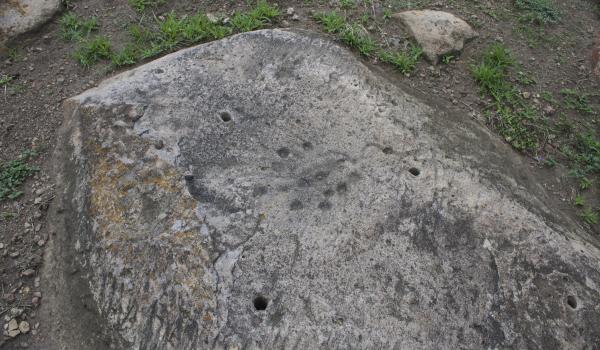
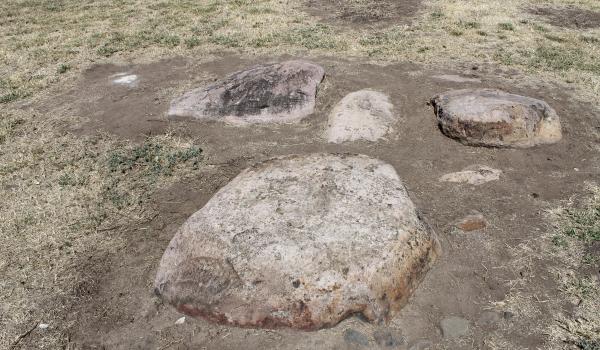
In the southern sector of the site there is a rock outcrop where several petroglyphs with various representations of dots, spirals and some other abstract motifs were found. Of this group, the remains of a dotted cross stand out, an element that apparently had a calendrical purpose.
Área de petrograbados
Patio hundido y edificios adyacentes
This type of architectural space is characterized by being the axis around which several buildings are distributed. In La Nopalera, the sunken patio follows the same pattern that appeared in the neighboring Bajío region during the years 100-900, that is, a space surrounded by a perimeter structure…
Patio hundido y edificios adyacentes
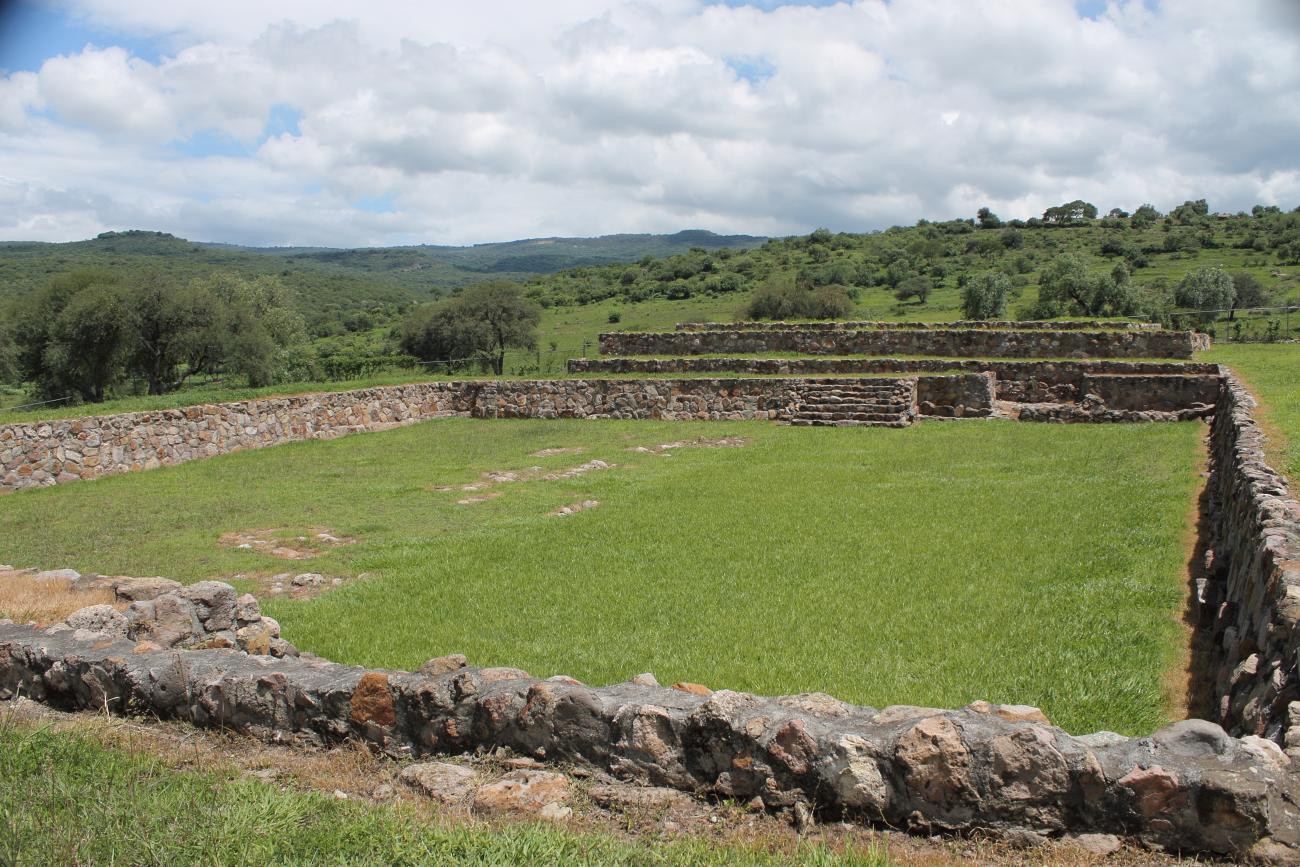
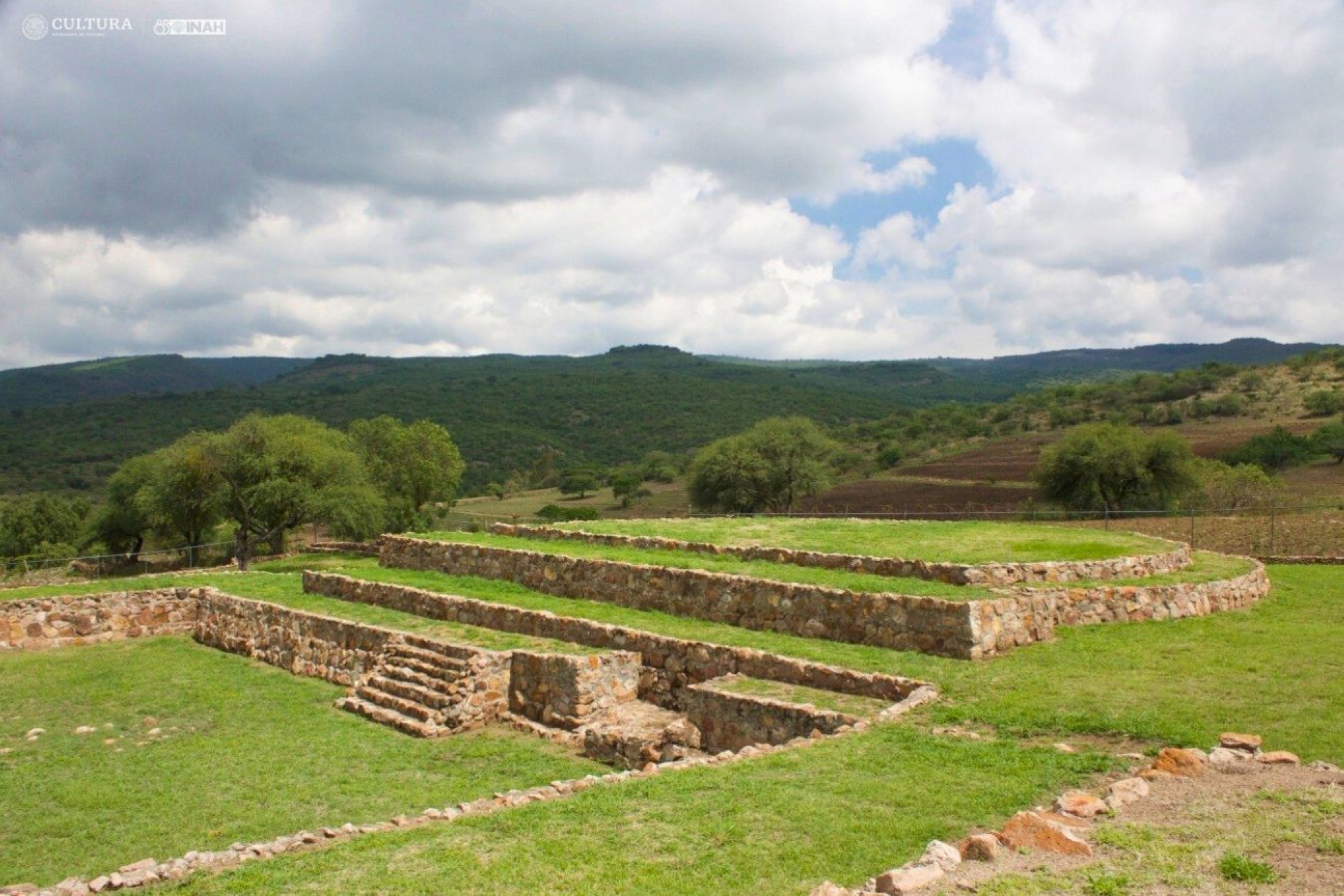
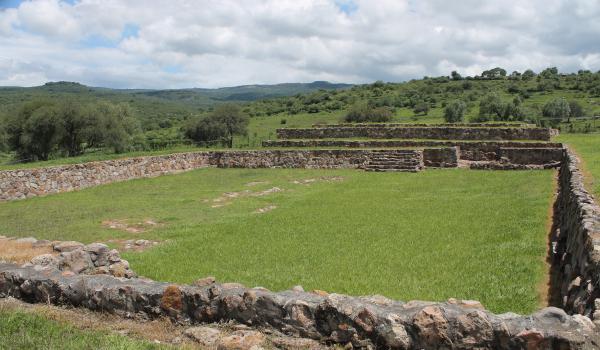
This type of architectural space is characterized by being the axis around which several buildings are distributed. In La Nopalera, the sunken patio follows the same pattern that appeared in the neighboring Bajío region during the years 100-900, that is, a space surrounded by a perimeter structure and lacking a central altar. The work carried out by archaeologist Angelina Macias in the 1980s revealed that the surface of this space had a rough cobblestone 1.30 m below the perimeter sidewalk. Towards the north and south flanks of the patio are the access stairways, and there was another one at the west end of the patio that cannot be seen because it was covered during the period of Tarascan occupation.
Archaeologist Angelina Macias also discovered 35 burials with elements of Tarascan affiliation at that time. Although they did not present a pattern, it was determined that they were arranged inside the filling, so it is inferred that they were part of an offering related to the construction of the new temple. Likewise, several limbs and skulls were found showing mutilation and decapitation practices. According to the Relación de Michoacán, when a temple was built, it was customary to sacrifice some people, generally captives.
Petrograbado de la Cruz Punteada
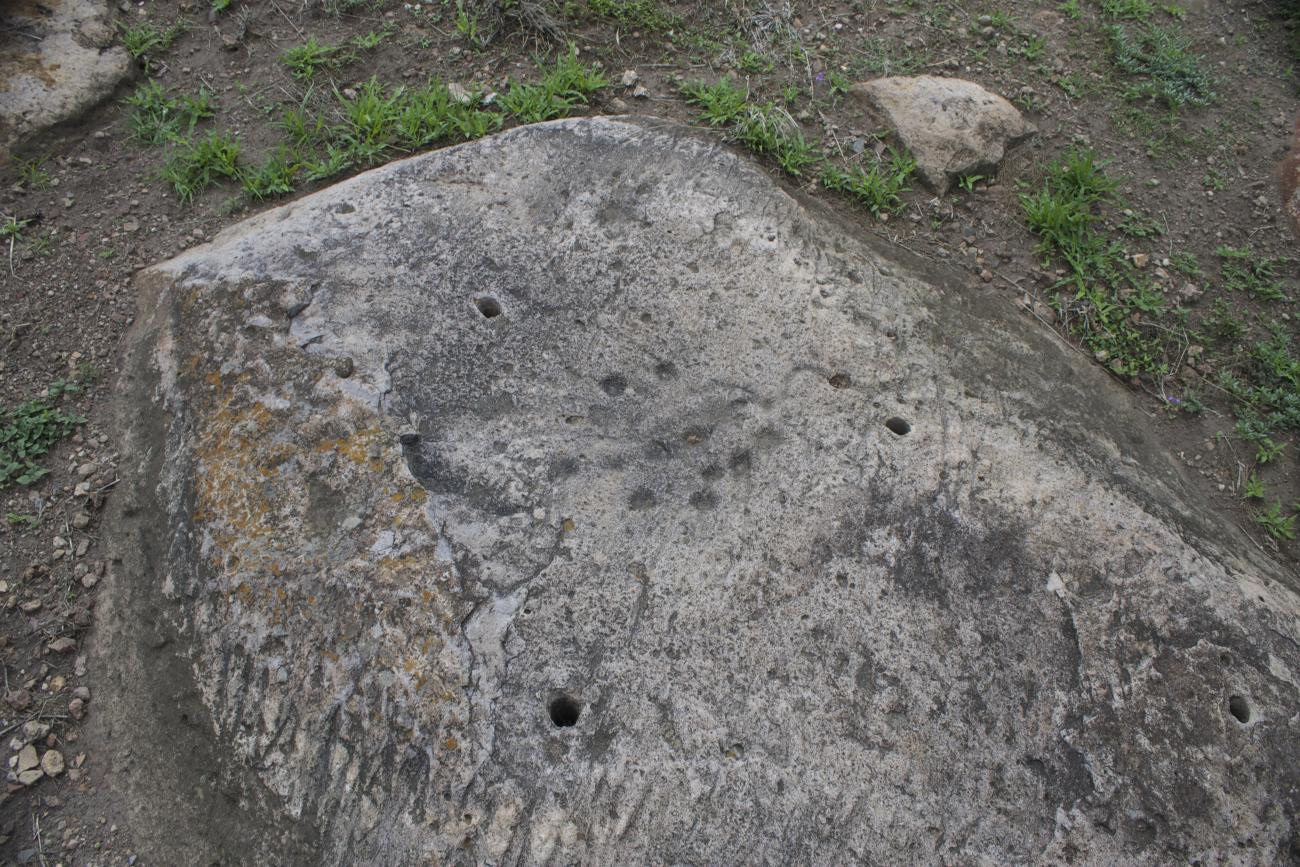
It is composed of two axes that cross two concentric circles, traced by means of small hollows in the stone. The orientation of the axes generally follows the cardinal points with very few degrees of deviation. In this way the “Mesoamerican cosmos” was represented, that is, the four directions and…
Petrograbado de la Cruz Punteada
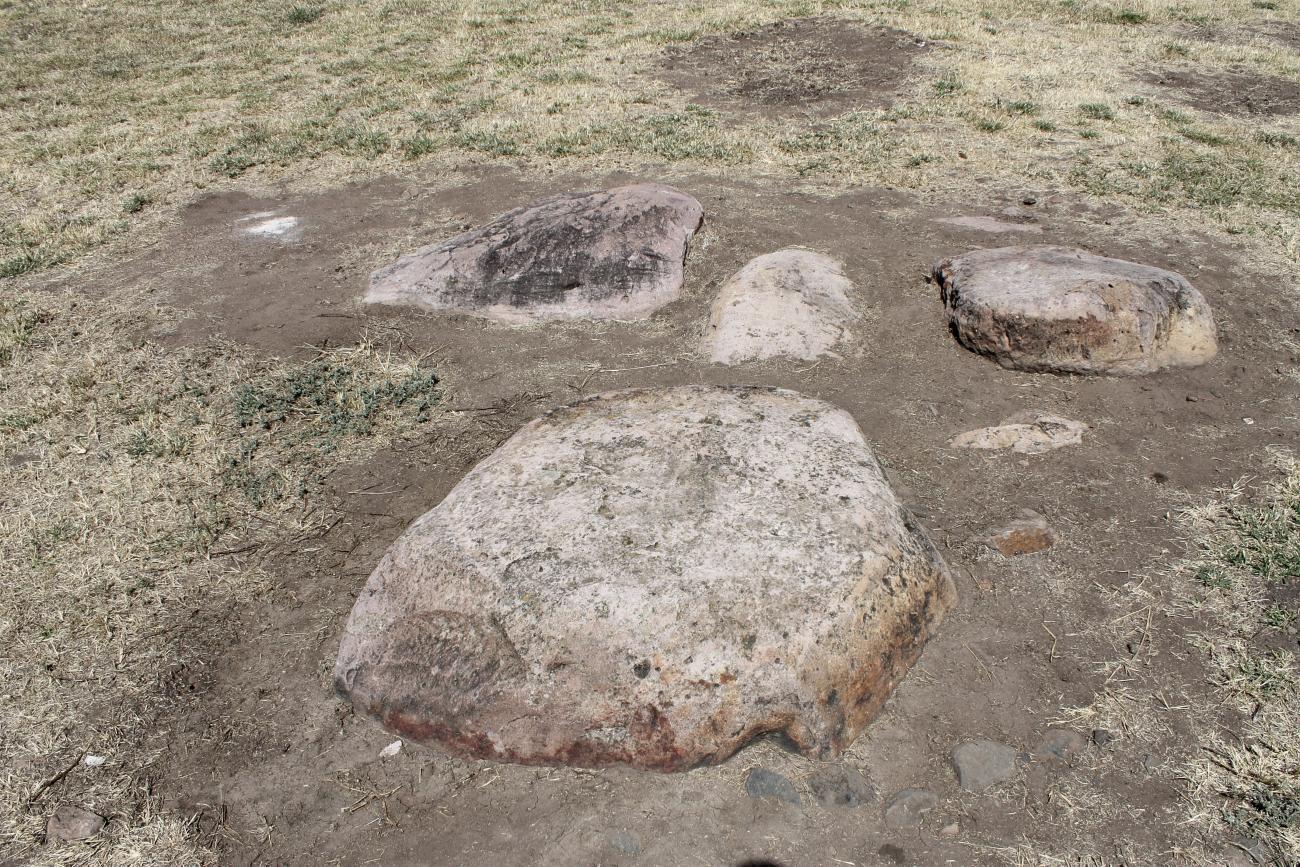
It is composed of two axes that cross two concentric circles, traced by means of small hollows in the stone. The orientation of the axes generally follows the cardinal points with very few degrees of deviation. In this way the “Mesoamerican cosmos” was represented, that is, the four directions and the center. The presence of this petroglyph at La Nopalera dates from the first period of occupation of the site.
Centro de control administrativo
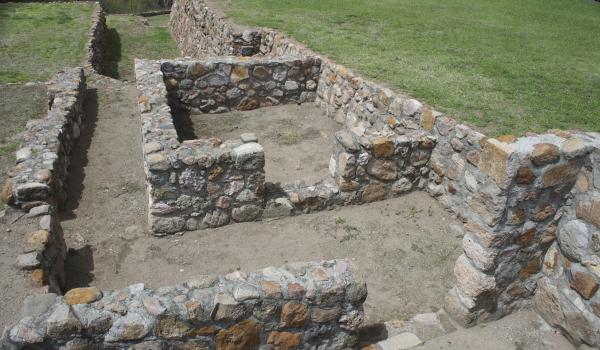
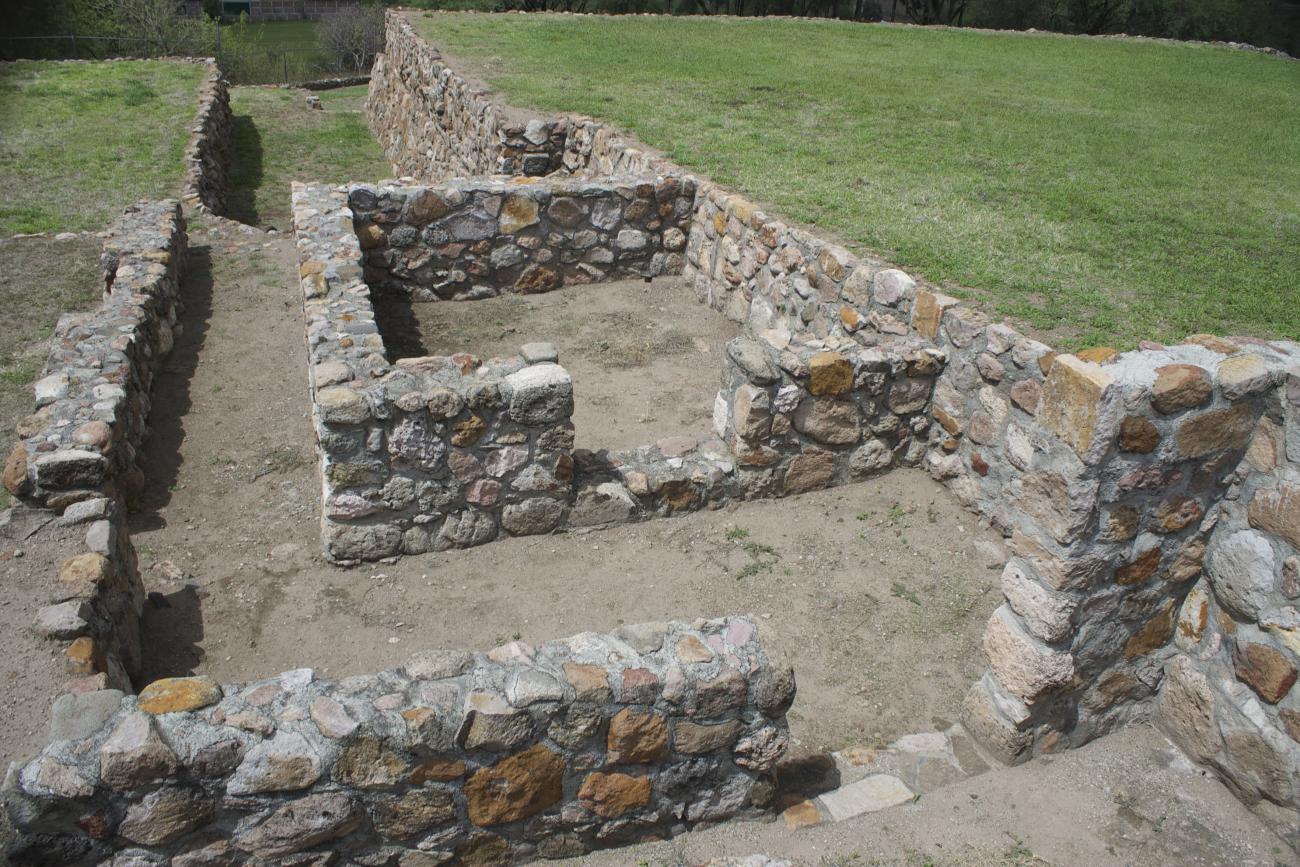
Originally it was thought that it was a space where the elite of La Nopalera lived, because it consists of a series of rooms in which the archaeological material was not so abundant. Today it is proposed that this area corresponds to an intermediate stage of occupation of the site.
Centro de control administrativo
Área de Sacrificios o Pozo 1
This strip of land is located on the west side of the Sunken Patio. Here, 35 burials with elements of Tarascan affiliation were found, as well as several limbs and skulls that indicate mutilation and decapitation practices.
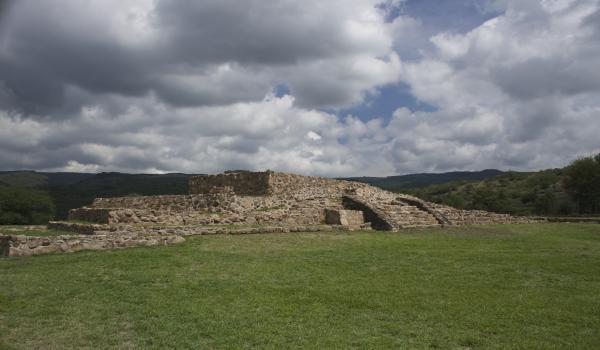
Plaza Este
Within the Mesoamerican religious tradition, plazas played an important role because they were used for various activities, including the congregation of people during religious celebrations. The East Plaza occupies a central place in the conformation of the last stage of the site. The stairway,…
Plaza Este
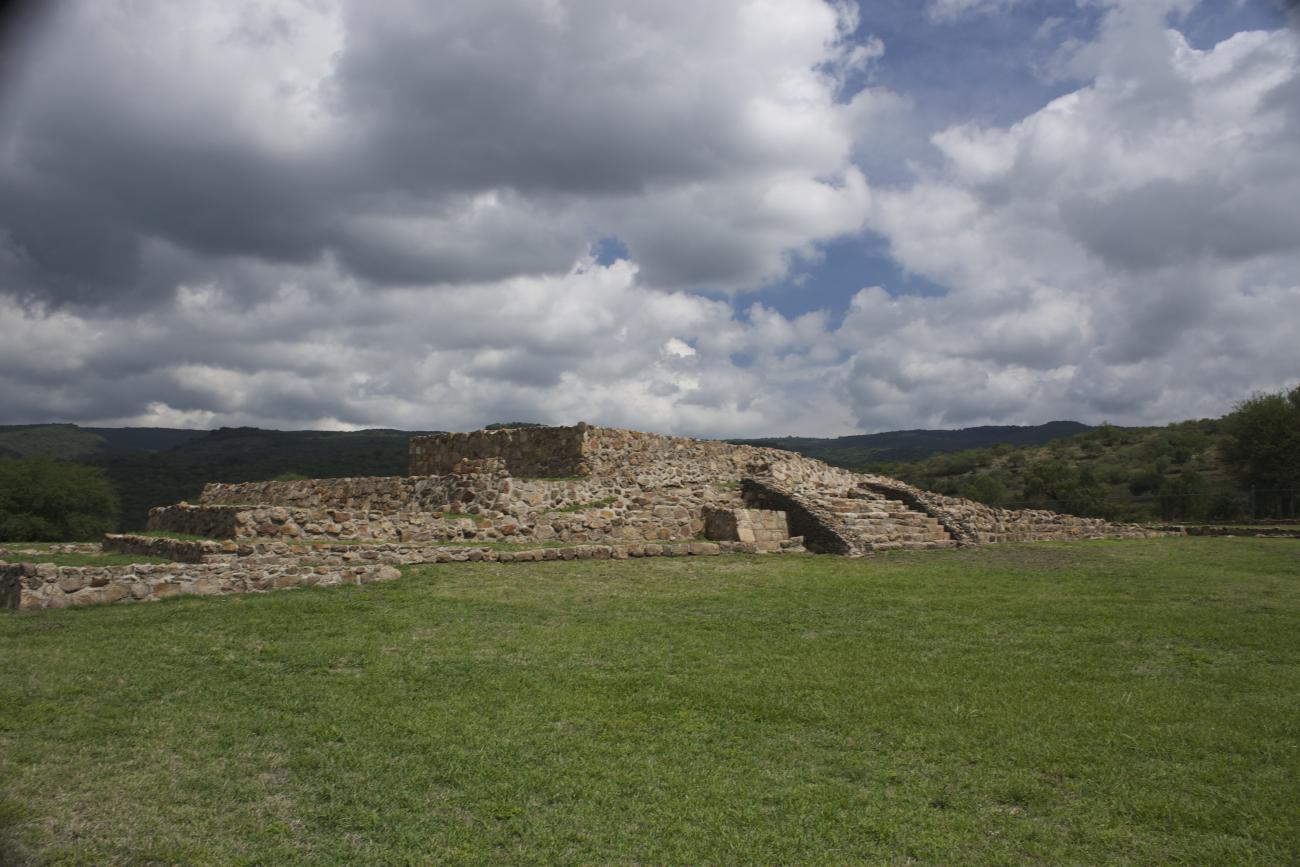
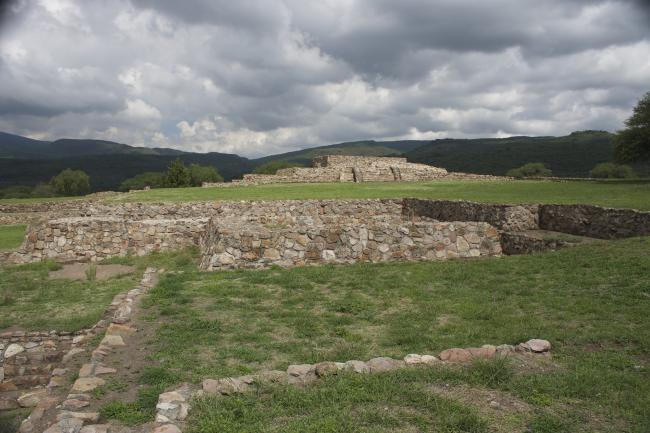
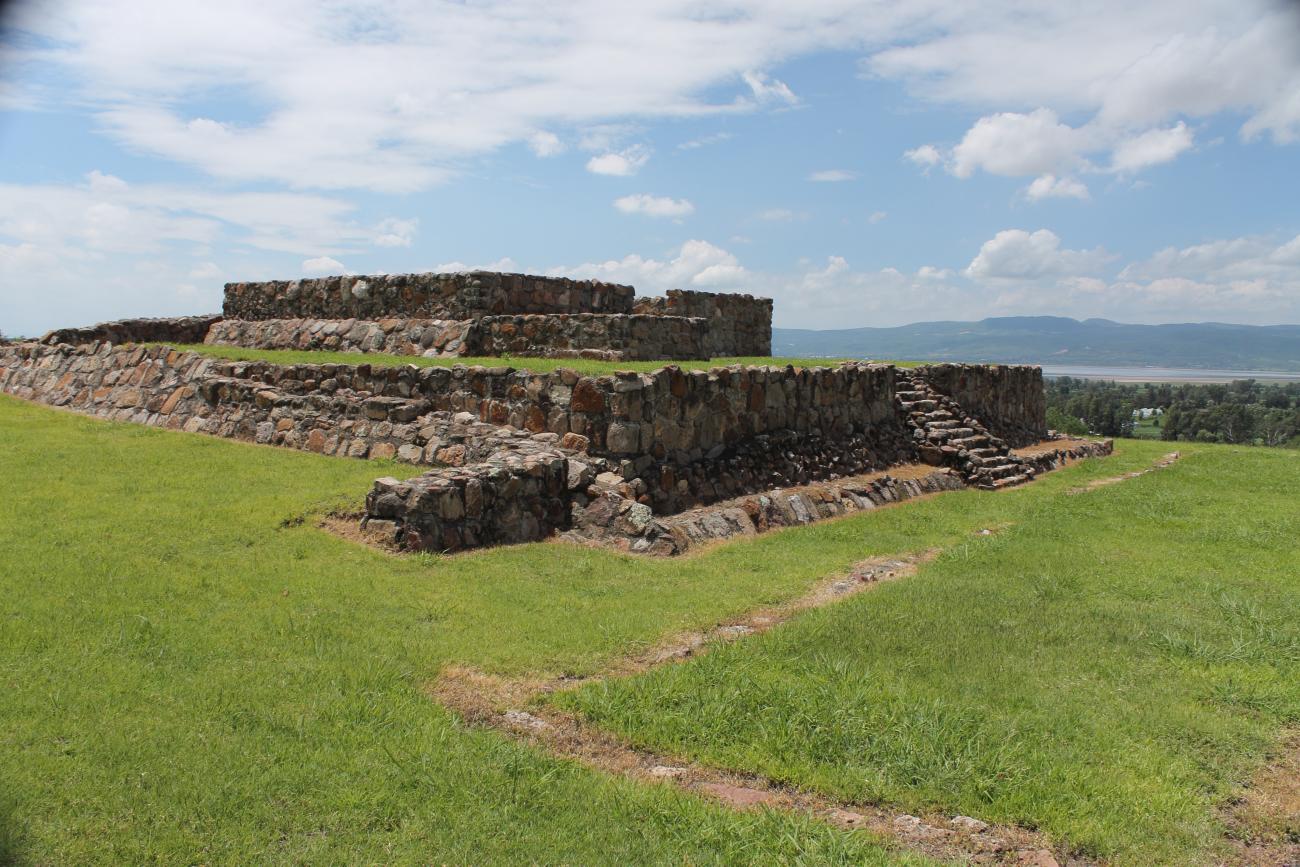
Within the Mesoamerican religious tradition, plazas played an important role because they were used for various activities, including the congregation of people during religious celebrations. The East Plaza occupies a central place in the conformation of the last stage of the site. The stairway, located on the west façade of Mound 2, is a sign that at some point the temple was related to the plaza, and it is inferred that they were part of the same architectural complex. The relationship between plaza and temple is common in sites such as Ihuatzio and Tzintzuntzan.
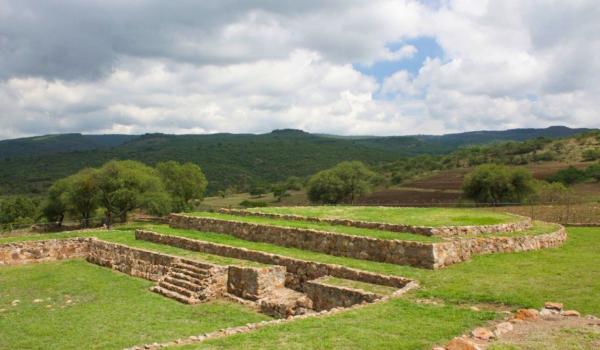
Edificio de planta mixta (Estructura circular)
It is located at the northern end of the Sunken Patio. The building is composed by a mixed platform, that is, by a circular floor to the north, and another one of rectangular form located in the direction of the sunken Patio. Although this construction maintains similarities with the yacatas of the…
Edificio de planta mixta (Estructura circular)
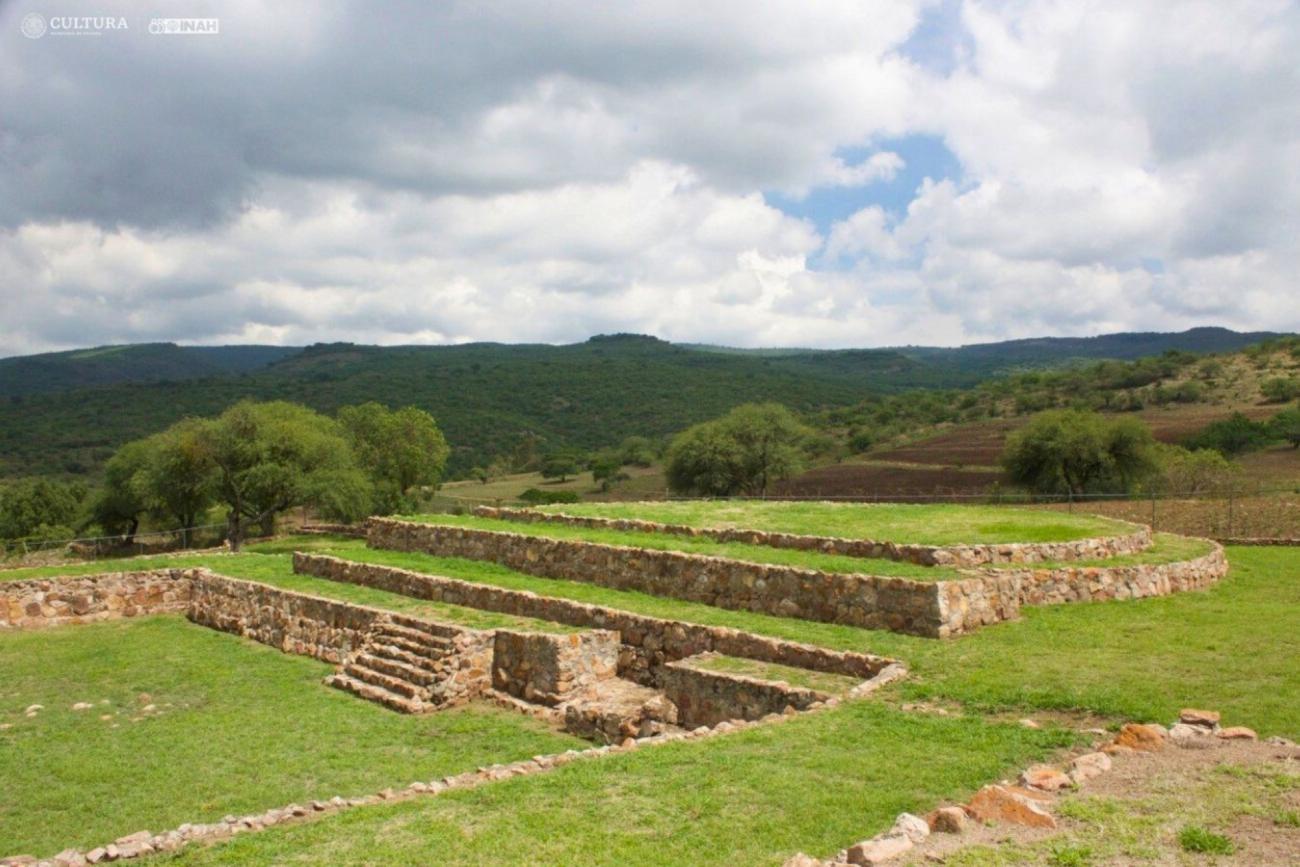
It is located at the northern end of the Sunken Patio. The building is composed by a mixed platform, that is, by a circular floor to the north, and another one of rectangular form located in the direction of the sunken Patio. Although this construction maintains similarities with the yacatas of the Tarascan architecture, it is not in its proportions. It should be noted that this same type of building has been reported in the vicinity of Salamanca, in the current state of Guanajuato.

Templo del Montículo 2
Inside this space, remains of a burnt mud covering with traces of reed, a very common material in the region, were found. In the exterior part of the temple a construction was discovered that has been interpreted as an adoratory.




Contact
- Dirección del Centro INAHMarco Antonio Rodríguez Espinosamarcoa_rodriguez@inah.gob.mx+52 (443) 313 2650

